Le catacombe dei Ss. Marcellino e Pietro, aperte al pubblico nel 2014 dopo lavori di messa in sicurezza e di restauro molto complessi, formano oggi, insieme alsoprastante mausoleo di Elena, un polo monumentale unico, la cui visita costituisce un’esperienza straordinaria di full immersion nella Roma tardo-antica. Come avvenne per tutte le principali catacombe romane, anche ad duas lauros l’uso funerario del sottosuolo da parte della comunità cristiana partí da piú ipogei autonomi, serviti ciascuno da scala d’accesso, che nel tempo si espansero, sino a fondersi fra loro, per formare uno dei piú estesi cimiteri sotterranei del suburbio romano. L’avvio del processo si inquadra al tempo della cosiddetta «piccola pace della Chiesa», nella seconda metà del III secolo, quando, sotto il principato di Gallieno (260-268) e per quasi un cinquantennio, i rapporti tra le autorità civili e la comunità cristiana registrarono un miglioramento. In questo nuovo clima la comunità cristiana poté insediare un sepolcreto ipogeo in prossimità della necropoli di superficie degli equites singulares Augusti, corpo di cavalleria emblema dell’autorità imperiale.
L’insediamento funerario cristiano si sviluppò secondo i criteri già messi in atto negli altri cimiteri del suburbio, quali S. Callisto, Domitilla e Priscilla: si scavarono lunghe gallerie (cryptae), nelle cui pareti si ricavarono tombe a loculo (loci, loculi), talvolta sormontate da un arco, dette perciò arcosoli (arcosolia, arcisolia). I loculi venivano chiusi con lastre in marmo o in laterizio, fissate con malta, su cui veniva inciso il nome del defunto. Ad duas lauros, lungo le gallerie, si aprono frequentemente cubicoli (cubicula), riservati a famiglie o associazioni, riccamente decorati da affreschi. Al lavoro di scavo del cimitero provvedeva la potente categoria dei fossori (fossores, laborantes), che presentava al suo interno una notevole organizzazione specialistica. Talvolta sono state riutilizzate cavità già esistenti, quali cunicoli idraulici e cave di pozzolana.
Biglietto intero € 15,00 Biglietto Catacombe € 10.00 + Biglietto Mausoleo di Sant’Elena €3,00 + Diritti di prenotazione € 2,00)
Biglietto ridotto € 12,00 (Biglietto Catacombe € 7.00 +Biglietto Mausoleo di Sant’Elena €3,00 + Diritti di prenotazione € 2,00)
Biglietto gratuito
Lingue disponibili per le visite guidate: Italiano, Inglese
Per altri orari e giorni disponibili scrivere a info@omniavaticanrome.org
SS MARCELLINO E PIETRO E MAUSOLEO DI S.ELENA
Indirizzo: Via Casilina, 641
METRO A: Fermata Arco di Travertino, a seguire Bus 409 fino alla fermata Tor Pignattara-Casilina.
Procedere a piedi per 10 minuti
METRO B: Fermata Tiburtina, a seguire Bus 409 fino alla fermata Tor Pignattara-Casilina.
Procedere a piedi per 10 minuti
METRO C: Fermata Parco di Centocelle, a seguire Bus 105 fino alla fermata Casilina-Berardi.
Our commitment is to offer pilgrims and visitors, through the catacombs, an experience of communion with the testimonies of the first Christian communities, which tell and illustrate, in an extremely suggestive way, the roots of faith and the horizon of Christian hope.
Mons. Pasquale Iacobone
President of the Pontifical Commission for Sacred Archaeology
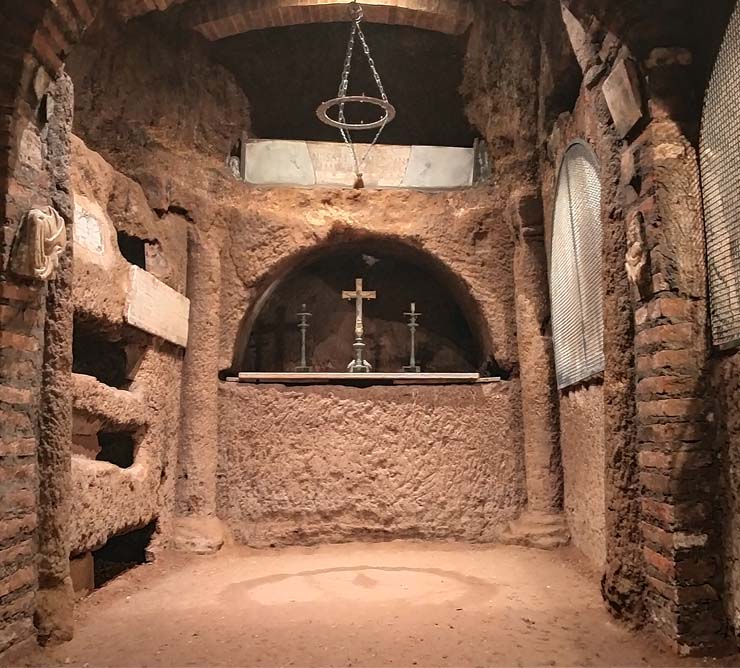
A very mportant environment is the crypt of the SS. Marcellino and Pietro, built by Pope Damasus (366-384) and then, in the sixth century, transformed into a real underground Basilica, destination of numerous pilgrimages.
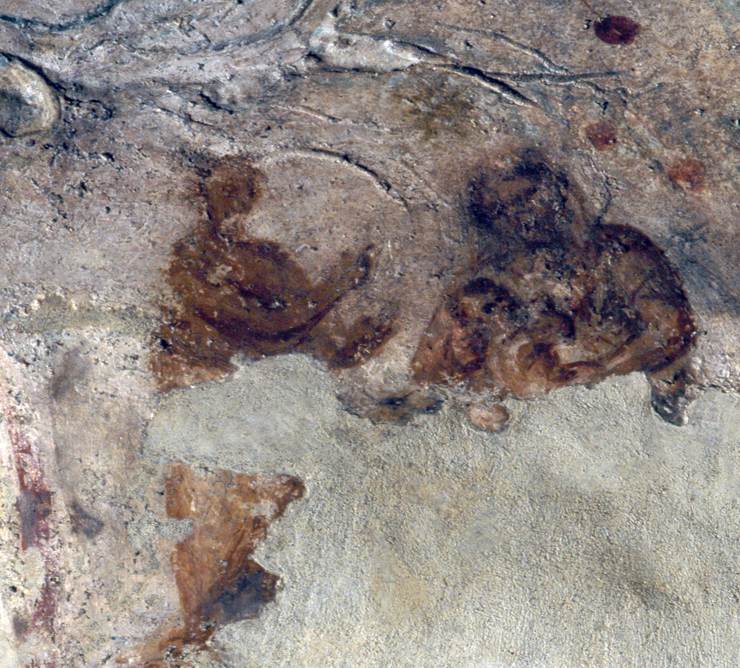
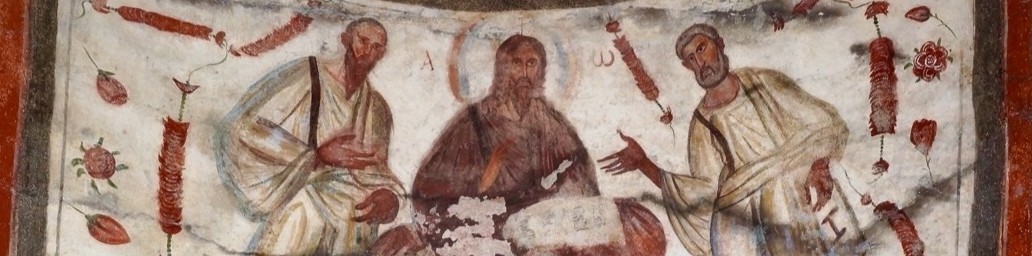
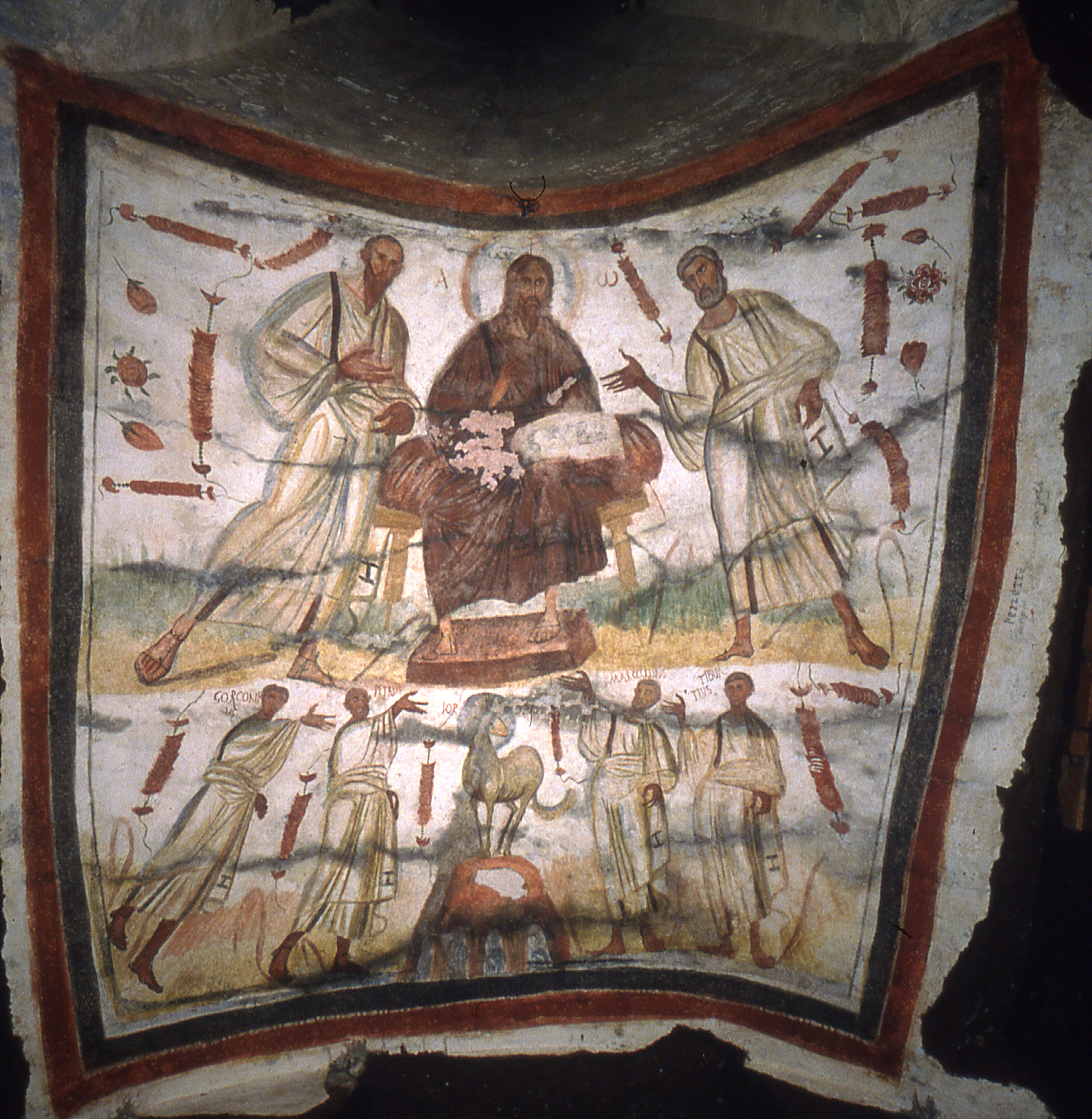
Not far from the crypt, there is a cubicle on whose vault you can see a fresco from the end of the 4th century in which the martyrs of the catacomb are represented in the presence of Christ enthroned between Saints Peter and Paul.
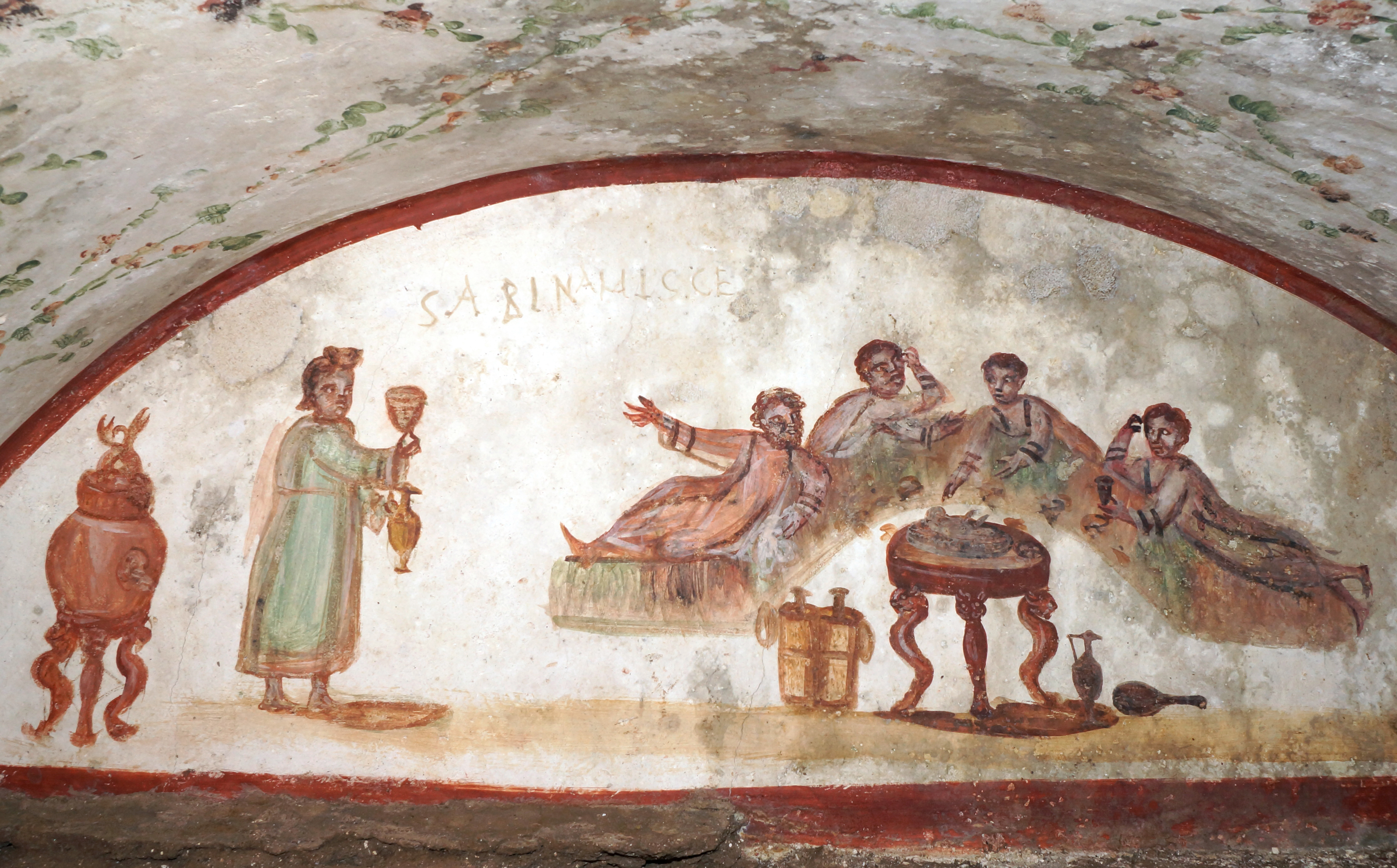
Among the recently restored frescoes it is possible to visit a series of rooms with singular banquet scenes to refer to both real and symbolic funerary rituals. The visit is completed by the museum exhibition housed in the rooms of the Mausoleum of St. Elena, which collects and illustrates the funerary testimonies that have occurred over the centuries in this area.
hide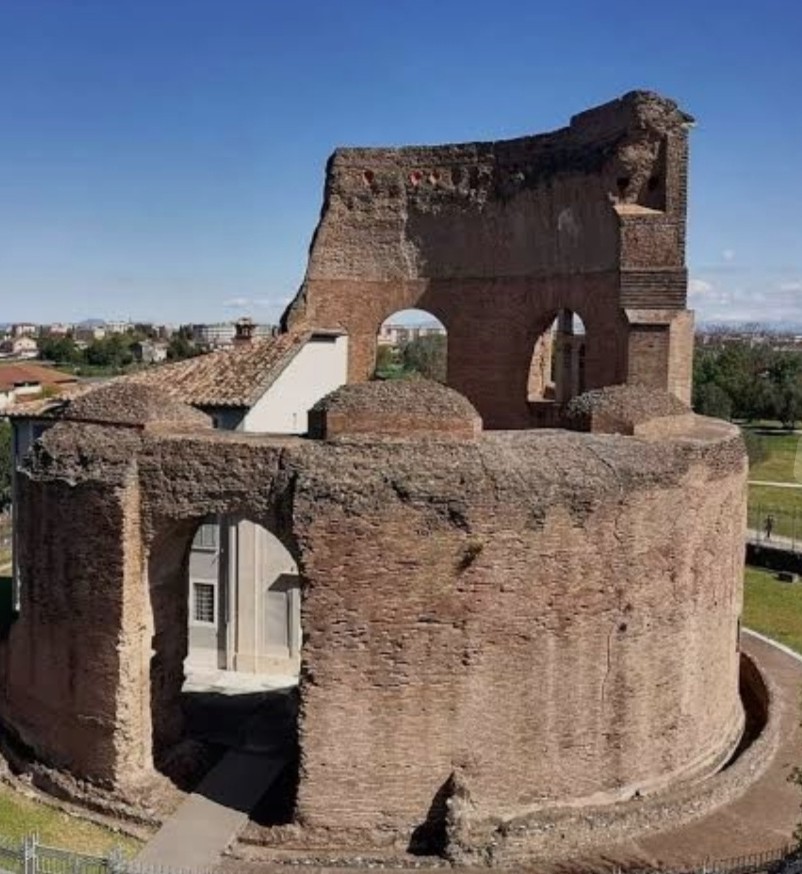
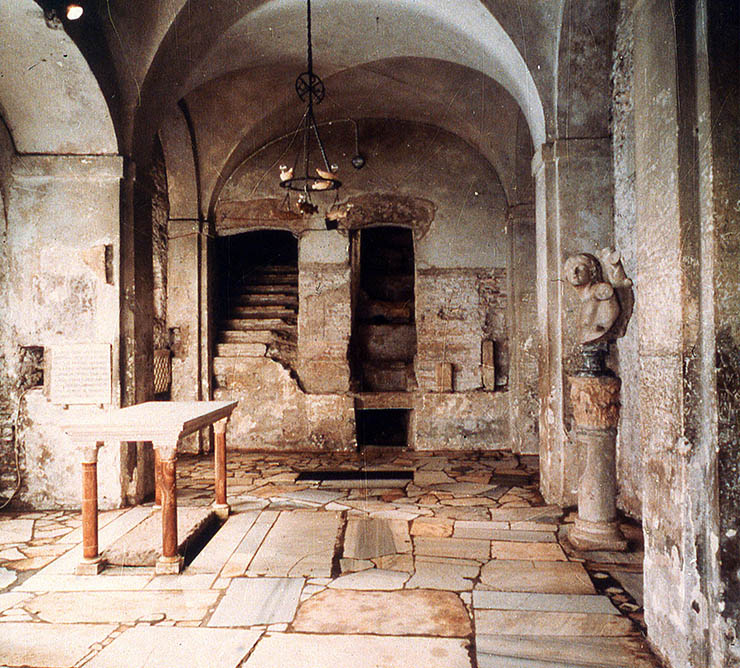
Between AD 315 and 326, inaugurating the gradual and deliberate Christianization of the suburban area, Constantine had a funerary basilica with a continuous ambulatory built, dedicated to the martyrs Marcellinus and Peter. It rose above the catacomb that preserved their remains at the third mile of the ancient Via Labicana (modern Via Casilina), in the area known as ad (or inter) duas lauros, within the imperial estate called fundus Laurentus (or Lauretum), already used as a burial ground along the ancient consular road. Connected to the basilica—through a rectangular atrium—was a large dynastic mausoleum, in which around AD 329 the emperor had his mother Helena buried inside a large red-porphyry sarcophagus (today preserved in the Vatican Museums, Museo Pio Clementino).
The mausoleum was built in brickwork (internal diameter 20.18 m, external diameter 27.74 m, preserved height 25.42 m), with a cylindrical base surmounted by a tall drum and originally covered by a dome. The collapse of part of the vault exposed two rows of Baetican oil amphorae of the Dressel 20 type—also called pignatte (from which the name of the modern district derives)—inserted into the concrete conglomerate, perhaps to reduce its weight or to facilitate its setting. In the Middle Ages, after the transfer of Helena’s body to Santa Maria in Aracoeli (under Pope Innocent II, 1130–1143) and of the sarcophagus to the portico of the Lateran for the burial of Pope Anastasius IV (1153–1154), the structure entered a long phase of decline. Over the centuries it suffered repeated spoliation of its rich interior decorations and progressive deterioration, which even the interventions carried out in 1836 by Giuseppe Valadier were unable to halt.
hide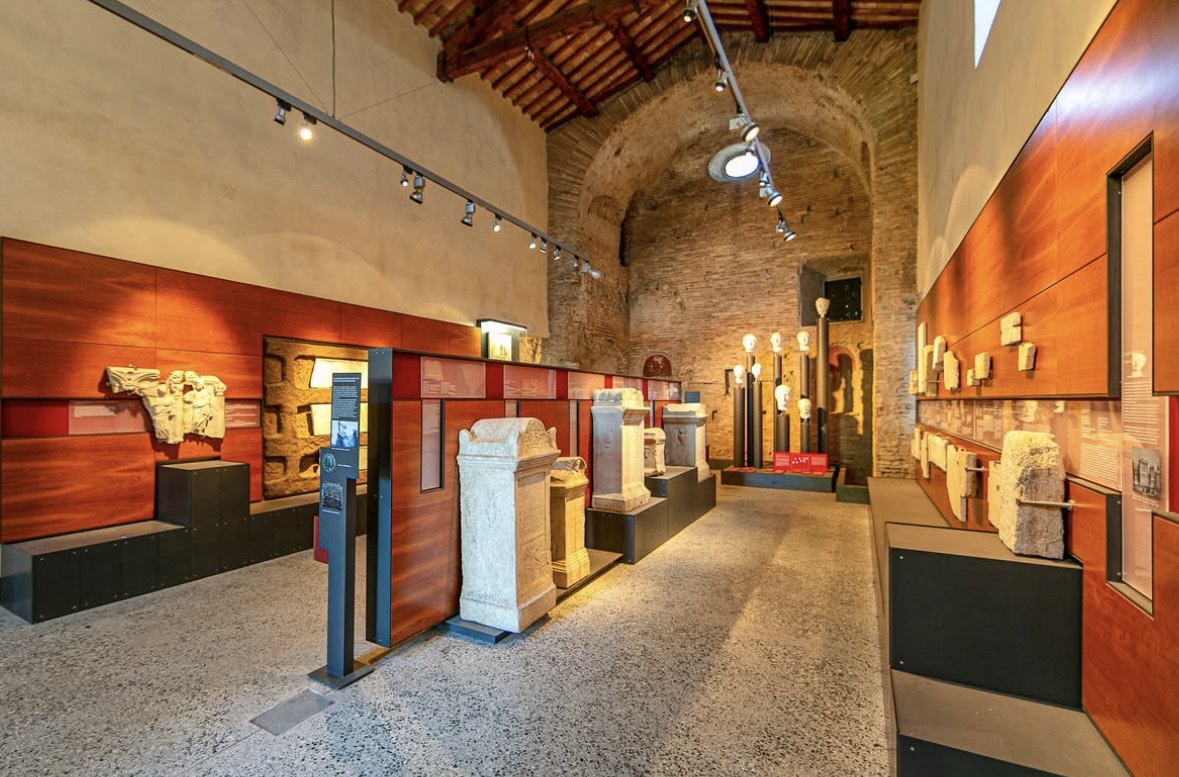
Starting in 1993, the then Archaeological Superintendency of Rome launched an extensive programme of excavation, recovery, restoration, and enhancement of the mausoleum and its surrounding area. At the same time, it drew up an important agreement with the Pontifical Commission for Sacred Archaeology (renewed in May 2019) concerning restoration activities, the creation of an Antiquarium – housed within the small church and rectory built in the modern era within the perimeter of the rotunda – and the management of the entire complex. The work, carried out by a multidisciplinary team of experts (museum project and restorations: Maria Grazia Filetici, Elio Paparatti; protection and archaeological direction: Laura Vendittelli, Anna Buccellato; scientific direction for the Pontifical Commission for Sacred Archaeology: Fabrizio Bisconti, Raffaella Giuliani), aimed to restore the structural safety and conservation of the ancient structures, making the transformations of the monument over the centuries perceptible.