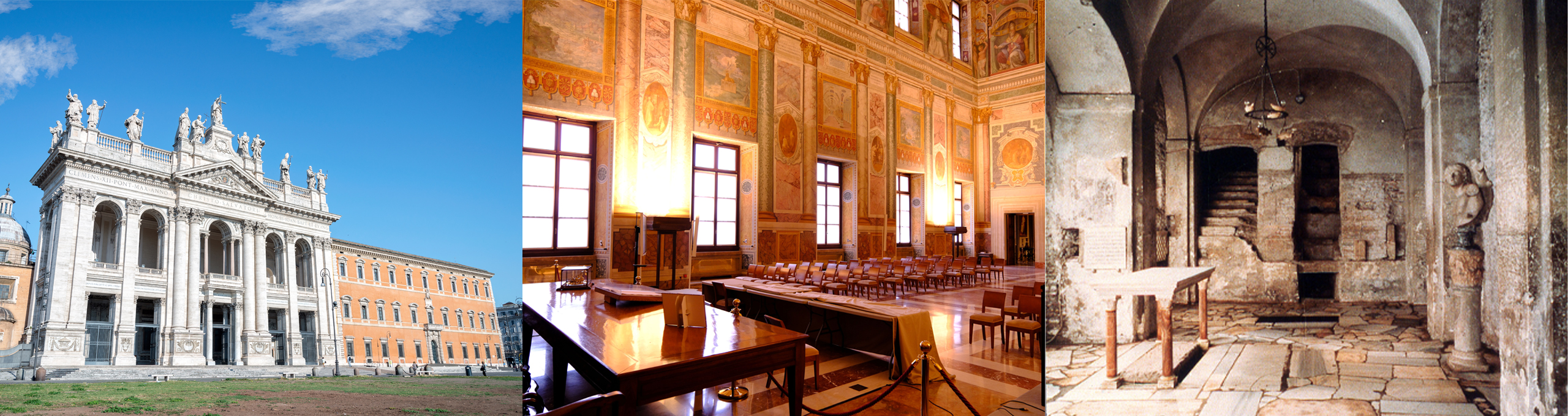
The experience begins at the Lateran Palace, where a multilingual audio guide will accompany you step by step through spaces rich in history, art, and spiritual significance.
The journey then continues to the Catacombs of Saint Sebastian, one of the most important sites of Christian memory, where the silence and depth of the underground spaces become an opportunity for reflection, prayer, and rediscovery of hope.
Thanks to an innovative multilingual audio guide, you will be able to explore this extraordinary complex completely independently, discovering its secrets, works of art, and profound religious significance.
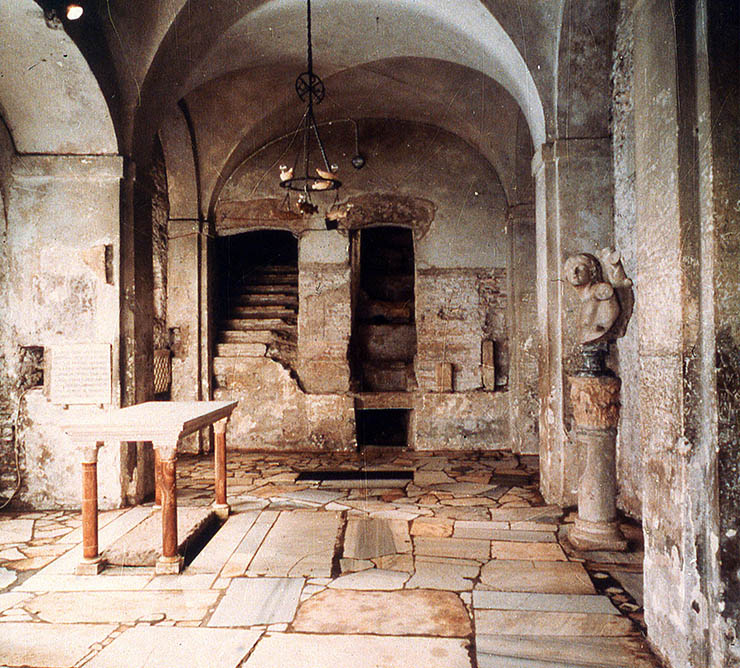
You will have the opportunity to discover the magnificent halls of the Lateran Palace, decorated with extraordinary works of art, admire frescoes that tell centuries-old stories, and immerse yourself in the unique atmosphere of this sacred and historic place. An official guide will accompany you inside the Catacombs of Saint Sebastian, which were created within an ancient pozzolana quarry originally known as ad catacumbas (“near the cavities”), a term that over time became synonymous with underground cemetery. From the 1st century onward, the area was extensively used: the underground galleries were transformed into burial chambers with loculi, while on the surface columbaria and richly decorated residential complexes were built (the so-called villa piccola and villa grande).
To listen to the audio guide you will need to download our Vatican&Rome App from the App Store or Play Store

Welcome and assistance from our staff
Lateran Palace
Guided Tour of the Catacombs of Saint Sebastian
Useful Information
Lateran Palace: Piazza San Giovanni in Laterano
Catacombs of Saint Sebastian: Via Appia Antica, 136
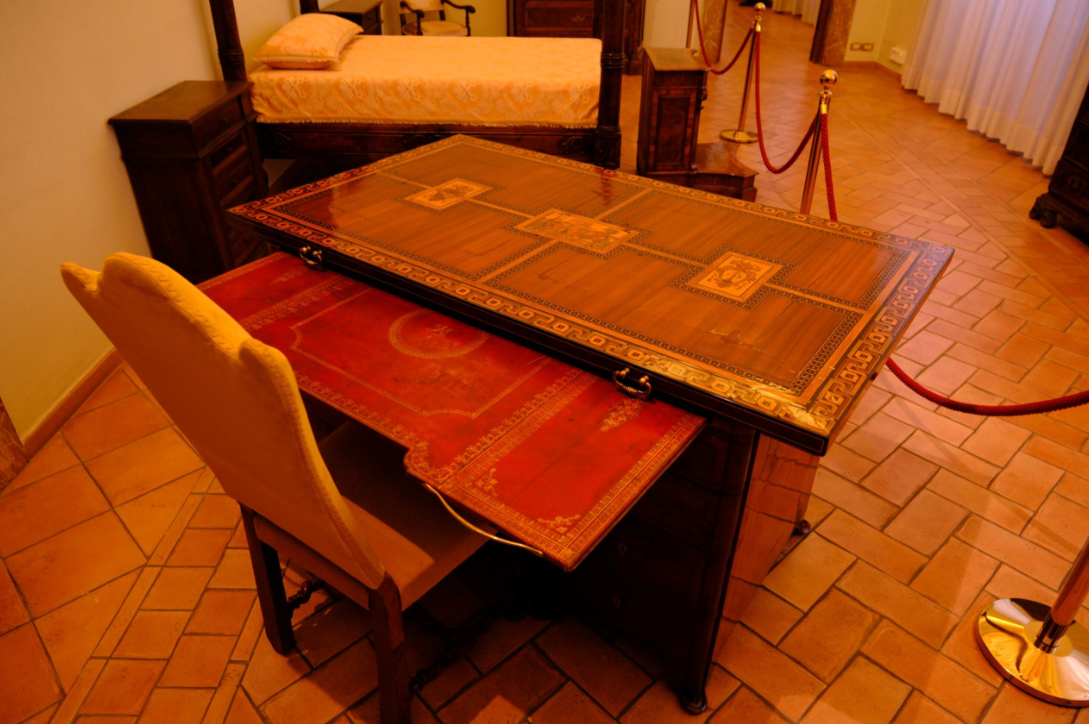
The private apartment consists of four very simply furnished rooms: a dining room, a bedroom with bathroom, a library, an antechamber, and the Chapel. In his private quarters, the Supreme Pontiff is reminded that he is a humble priest, a servant of God and of His Church.
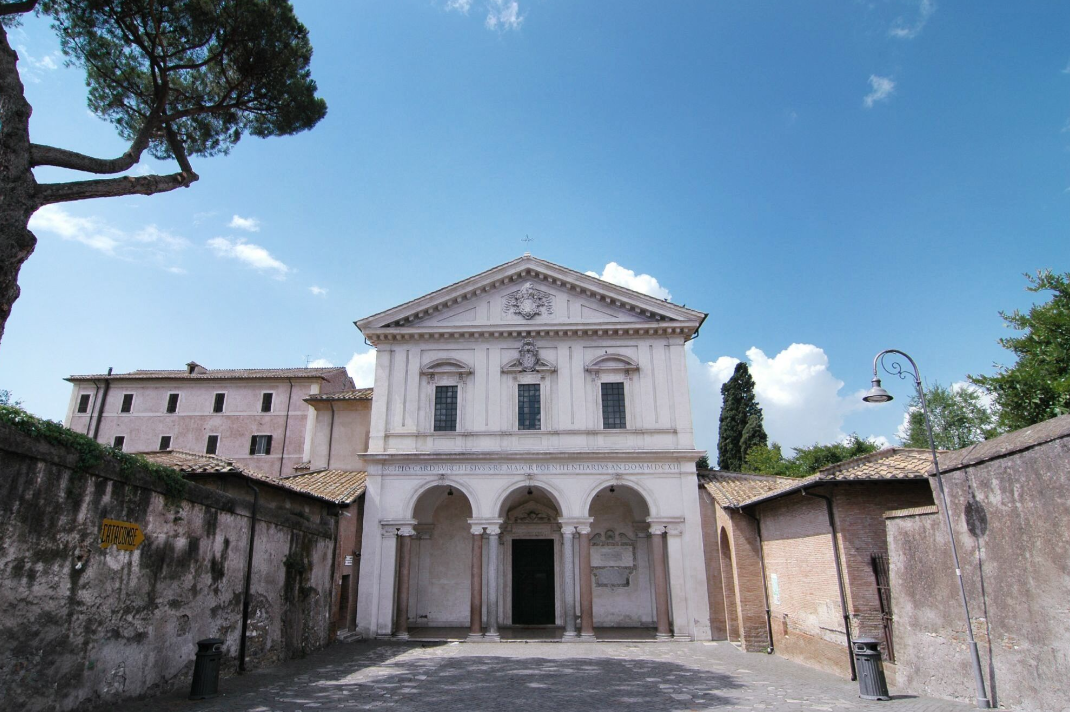
The site where the Catacombs of Saint Sebastian stand was once a deep depression used as a pozzolana quarry and known as ad catacumbas (“near the cavities”), a term that eventually became synonymous with underground cemetery.
From the 1st century onwards, the area was extensively developed and used: the underground galleries were transformed into burial chambers with loculi, while on the surface several columbaria and at least two residential complexes (the so-called villa piccola and villa grande) were built, richly decorated with remarkable wall paintings. Around the middle of the 2nd century, the bottom of the depression was filled in to create a flat area, along one side of which three mausoleums were built in succession: those of Clodius Hermes, the Innocentiores, and the Ascia.
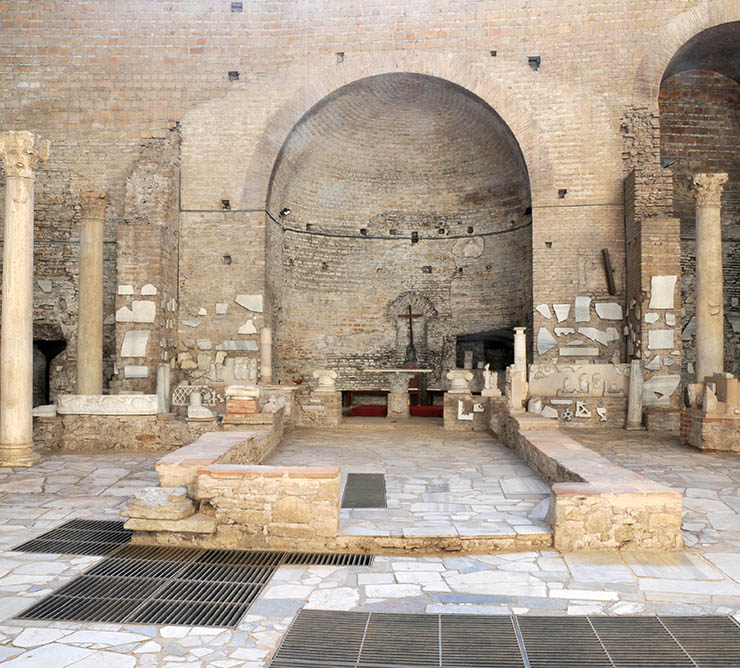
A further filling of the area was later carried out to make room for the construction of the triclia, a portico enclosed by a wall on which numerous graffiti invocations to Saints Peter and Paul have been identified, showing that around the year 250 the two Apostles were venerated together in this place.
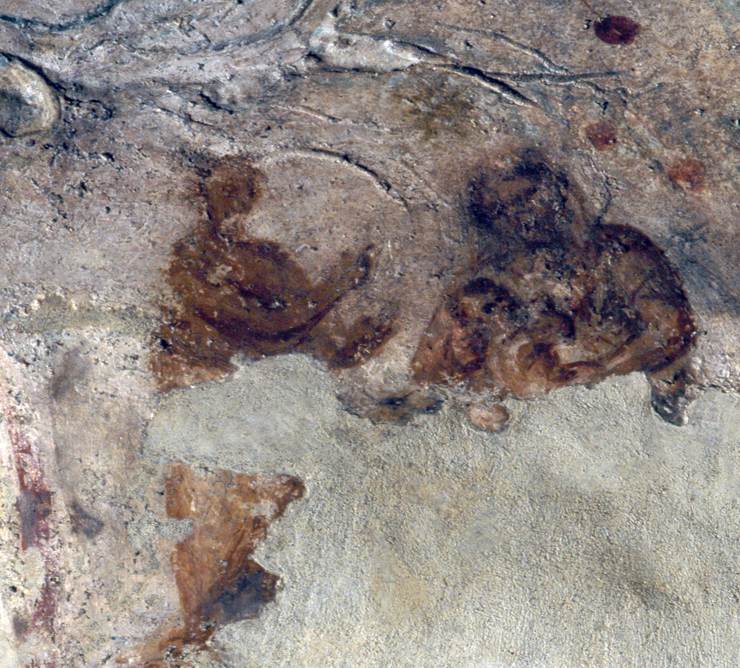
Later, Emperor Constantine (306–337) commissioned the construction of a basilica in the shape of a Roman circus (known as the “circiform” basilica). Meanwhile, as early as the 3rd century, the catacomb began to develop underground, eventually housing the tombs of the martyrs Sebastian and Eutychius.
hide