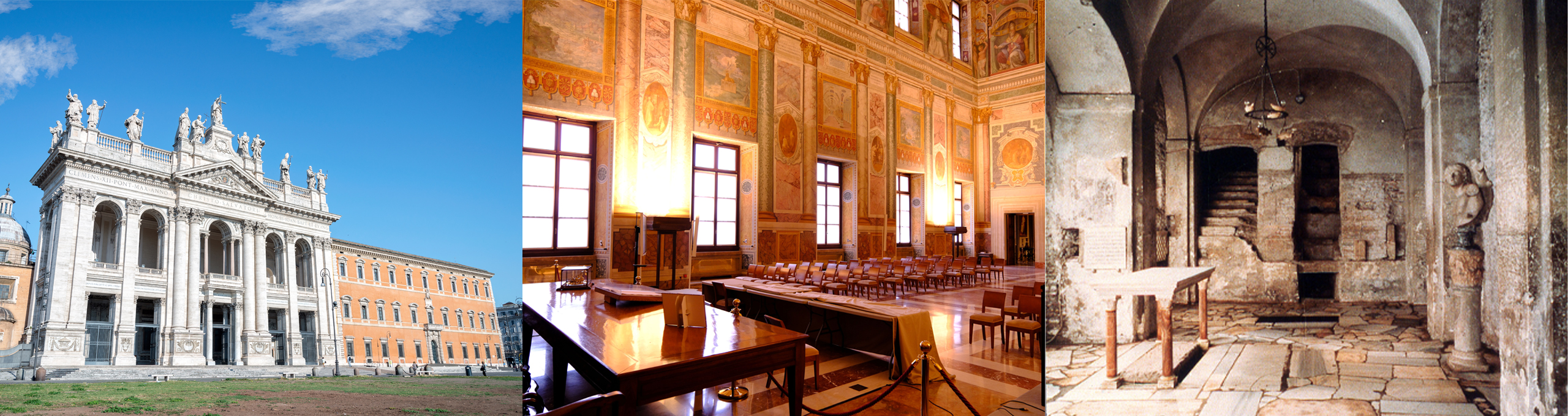
L’esperienza inizia presso il Palazzo Lateranense, dove un’audioguida multilingue vi accompagnerà passo dopo passo attraverso ambienti ricchi di storia, arte e significato spirituale.
Il percorso proseguirà poi alle Catacombe di San Sebastiano, uno dei più importanti luoghi della memoria cristiana, dove il silenzio e la profondità degli spazi sotterranei diventano occasione di riflessione, preghiera e riscoperta della speranza.
Grazie a un’innovativa audioguida multilingue, potrete esplorare in totale autonomia questo straordinario complesso, scoprendone i segreti, le opere d’arte e il profondo significato religioso.
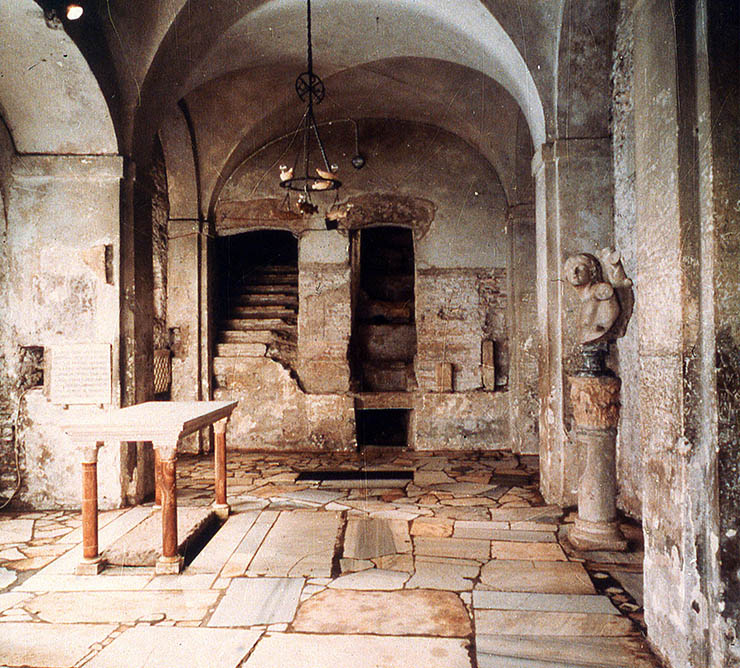
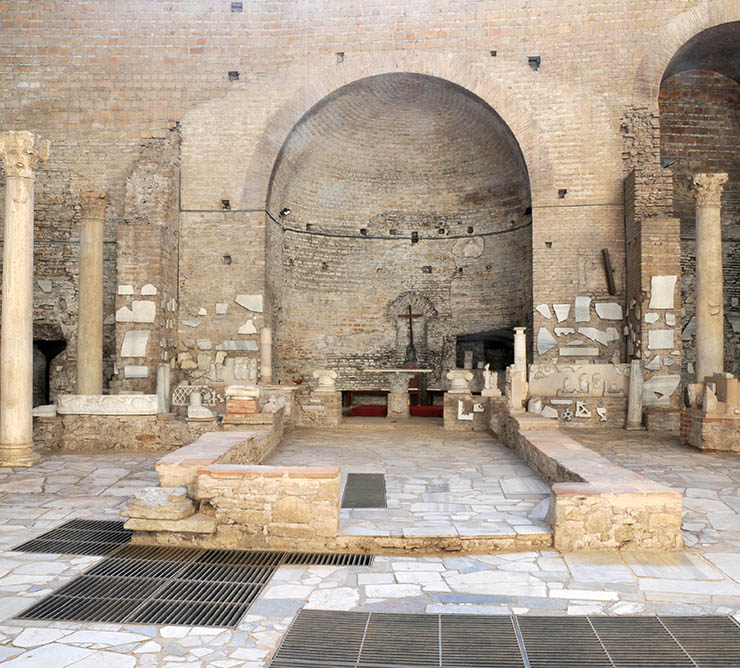
Sarà possibile scoprire le magnifiche sale del Palazzo Lateranense decorate con opere d'arte straordinarie, ammirare gli affreschi che raccontano storie millenarie e immergersi nell'atmosfera unica di questo luogo sacro e storico. Una guida ufficiale vi accompagnerà all’interno delle Catacombe di San Sebastiano: Catacombe che sorgono in un’antica cava di pozzolana, conosciuta in origine come ad catacumbas (“presso le cavità”), termine che nel tempo è diventato sinonimo di cimitero sotterraneo. Fin dal I secolo, l’area fu intensamente utilizzata: le gallerie sotterranee furono trasformate in sepolture a loculi, mentre in superficie sorsero colombari e complessi residenziali decorati (le cosiddette villa piccola e villa grande).
Per ascoltare l'audioguida sarà necessario scaricare la nostra App Vatican&Rome da App Store o Play Store

Palazzo Lateranense
È obbligatorio prenotare data e ora della visita. Il sito rispetta i seguenti orari di apertura: Da lunedì a sabato 09:00 - 17:00 ultimo ingresso ore 15:30 (chiusura domenica e festività religiose)
Visita guidata presso le Catacombe di San Sebastiano:
Informazioni utili
Palazzo Lateranense: Piazza San Giovanni in Laterano
• Da Stazione Termini: Metro A: fermata San Giovanni (5 minuti a piedi)
Catacombe di San Sebastiano: Via Appia Antica, 136
• Da San Giovanni in Laterano: Bus 218 (direzione Ardeatina) → fermata Fosse Ardeatine
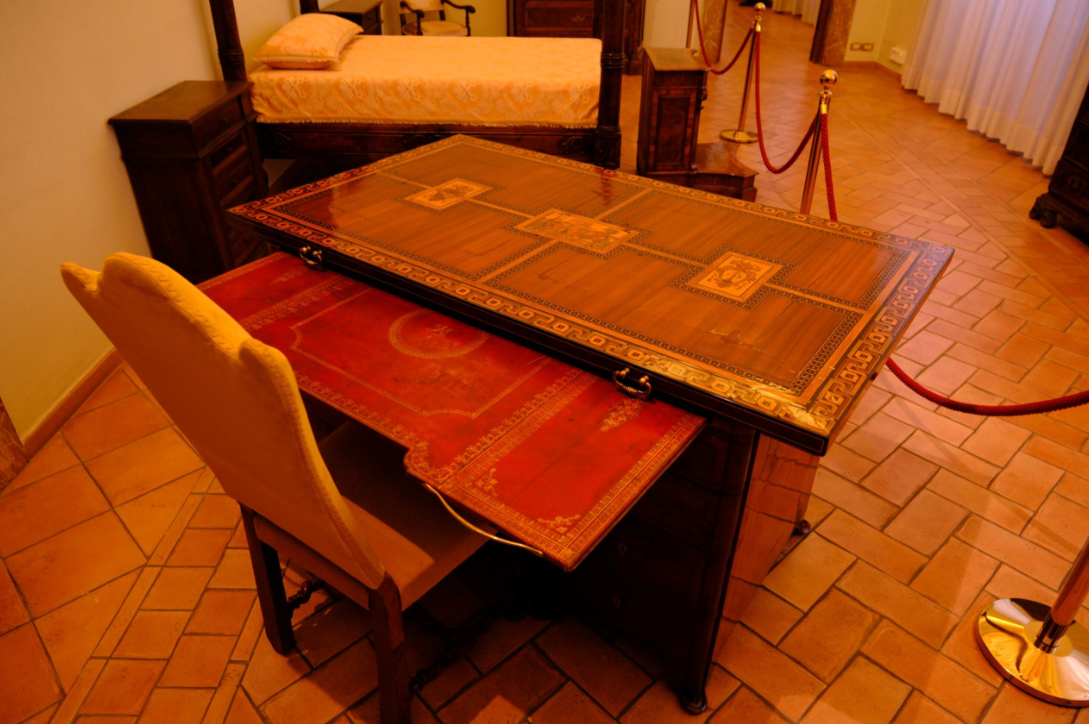
The private apartment consists of four very simply furnished rooms: a dining room, a bedroom with bathroom, a library, an antechamber, and the Chapel. In his private quarters, the Supreme Pontiff is reminded that he is a humble priest, a servant of God and of His Church.
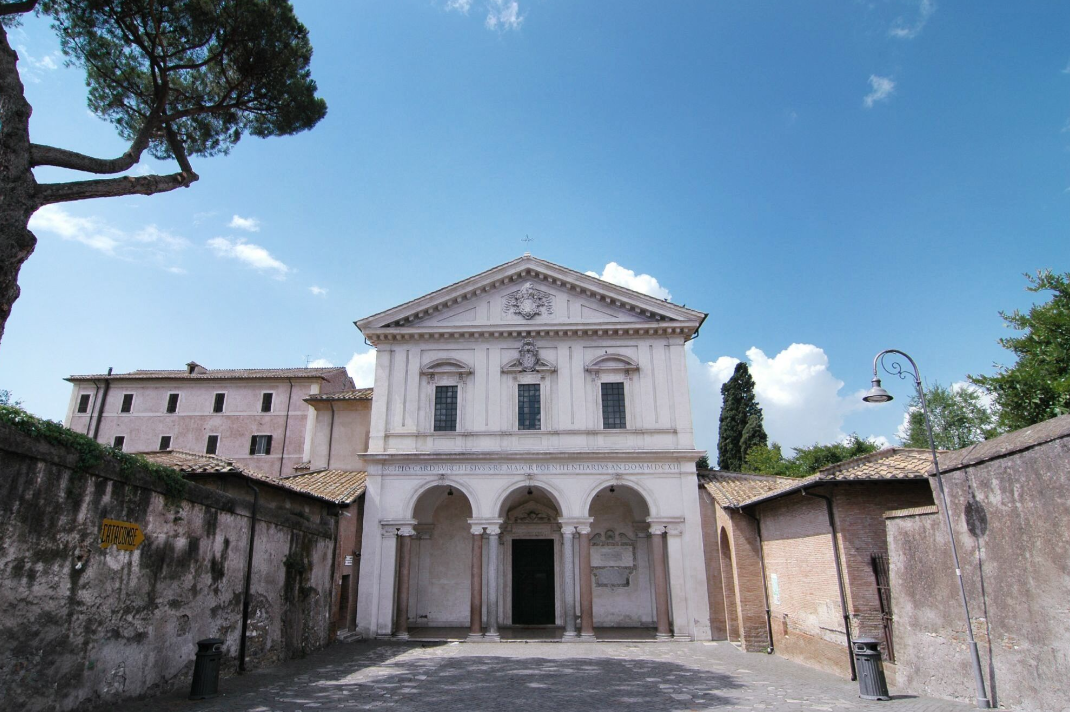
The site where the Catacombs of Saint Sebastian stand was once a deep depression used as a pozzolana quarry and known as ad catacumbas (“near the cavities”), a term that eventually became synonymous with underground cemetery.
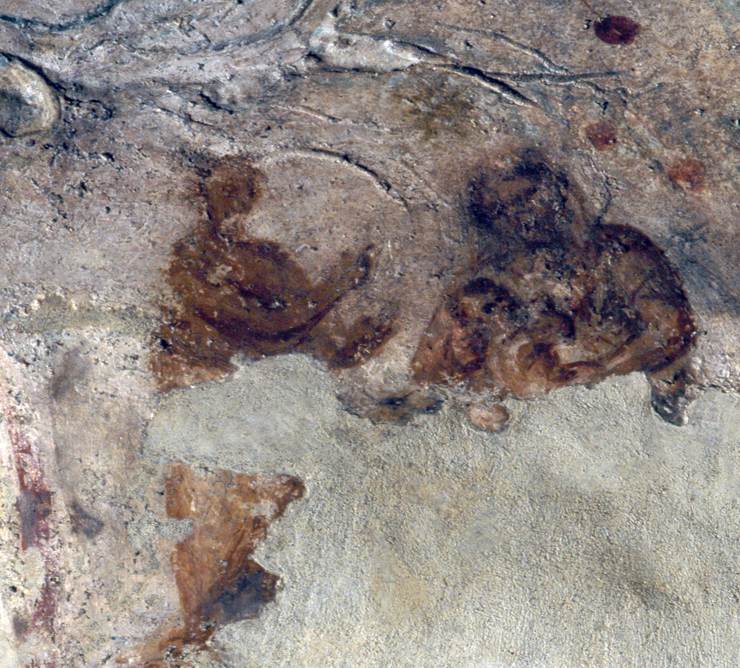
From the 1st century onwards, the area was extensively developed and used: the underground galleries were transformed into burial chambers with loculi, while on the surface several columbaria and at least two residential complexes (the so-called villa piccola and villa grande) were built, richly decorated with remarkable wall paintings. Around the middle of the 2nd century, the bottom of the depression was filled in to create a flat area, along one side of which three mausoleums were built in succession: those of Clodius Hermes, the Innocentiores, and the Ascia.
A further filling of the area was later carried out to make room for the construction of the triclia, a portico enclosed by a wall on which numerous graffiti invocations to Saints Peter and Paul have been identified, showing that around the year 250 the two Apostles were venerated together in this place.
Later, Emperor Constantine (306–337) commissioned the construction of a basilica in the shape of a Roman circus (known as the “circiform” basilica). Meanwhile, as early as the 3rd century, the catacomb began to develop underground, eventually housing the tombs of the martyrs Sebastian and Eutychius.
hide